August 2026

Welcome to the BetterMen Bulletin.

For many men, we fall into traps of our own making; we spend years, and in some cases, decades, pursuing the wrong rewards - only to experience the side effects of success: time poverty, loneliness, poor health, midlife crisis and divorce.


My monthly Bulletin is for men asking bigger questions about themselves and their lives. If you’ve arrived at a place, or feel you’re heading toward it, where the pursuits of your younger years no longer feel meaningful or satisfying, my monthly Bulletin, which includes a range of resources relating to all things men, mindset and success, is for you.

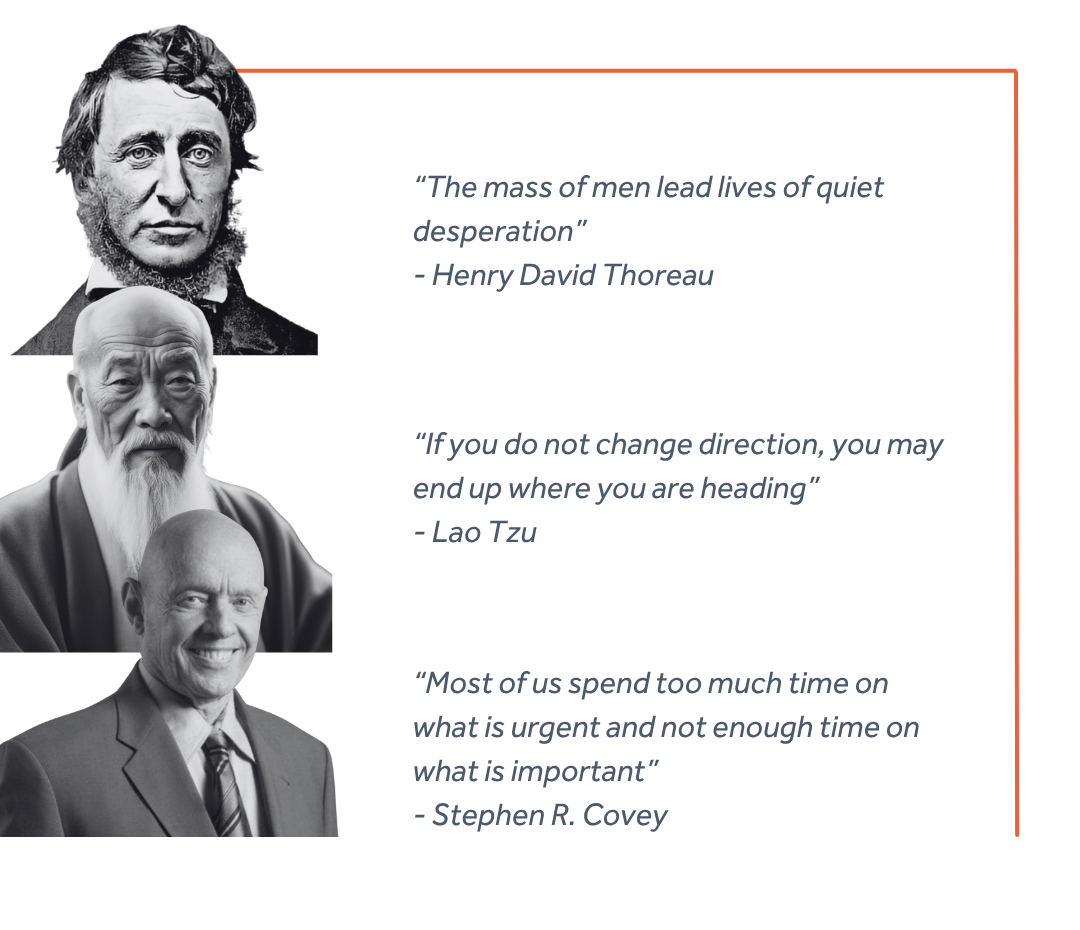
Don’t just read the quotes. Instead, take a moment to consider them and hold them up against your life.


This month’s quote theme is: The Midlife Rut


Most men don't suddenly wake up one morning and realise they're in a rut. It happens slowly. Life becomes increasingly predictable: same alarm, same commute, same conversations, same pressures, same Friday night takeaway, same promise that you'll sort yourself out when work quietens down. Nothing is necessarily wrong, but not much feels particularly right either. 


If you're in a rut, don't just ask yourself how you got here, ask yourself what you're going to do about it; these quotes might help you hold the mirror up to your life.

You become flatter, less adventurous; perhaps you’ve stopped looking forward to things. Sex becomes less frequent, friendships feel distant, exercise becomes something you used to do, and work occupies far more mental space than it deserves.


You're not falling apart, you're just not particularly alive.


I see this all the time with the men who come to work with me. Successful, capable men who have spent twenty or thirty years building careers, raising families, paying mortgages and being responsible. They've become very good at doing what needs to be done; the problem is they've forgotten to ask what they need. And there's evidence that midlife really can be a difficult psychological period.


ONS research involving more than 300,000 people found that life satisfaction and happiness were lowest among people aged 45–59, while anxiety peaked around the same period. Researchers point towards the obvious pressures of midlife: career responsibility, children, mortgages and, increasingly, ageing parents. More recent ONS figures tell a similar wider story. Almost a quarter of UK adults report high anxiety, while around one in four show evidence of depression or anxiety. But here's where we need to be careful… Understanding why you're in a rut cannot become an excuse for staying there.


For many, a rut is often a life that hasn't been updated. You're still operating with priorities, routines, relationships and definitions of success created by an earlier version of you. At 25, progress might have meant earning more, proving yourself, buying a house and building security.


At 45, the questions change: Do I like the man I've become? Is my marriage actually good? Do I have meaningful friendships? Am I healthy? What am I excited about? When did I last do something that made me feel properly alive? These aren't signs of a midlife crisis, but you can’t get used to feeling average. Equally, you shouldn’t normalise your tiredness, your disconnection and/or dissatisfaction. You mustn’t convince yourself this is simply what middle age feels like.


Getting out of a rut doesn't necessarily require blowing your life up; often it starts with challenging the status quo… Rebuild your body, call your mate, take your wife out, change your routine, learn something new, get outside. Have the conversation you've been avoiding, put something in the diary that scares you a little and excites you a lot.


Sit down, to take a minute, to read, reflect or journal on the prompts presented below.


This month’s prompt theme is: The Man in the Mirror


There's one relationship that influences every other relationship in your life, and it's the one you have with yourself. For some men, that's an uncomfortable thought. You might be respected at work, loved by your family, relied upon by your friends and considered successful by almost everyone who knows you.


But what do you think about yourself? Strip away the job title, the income, the house, the responsibilities and other people's opinions… do you actually like the man underneath it all? It's a question worth asking because plenty of men spend the first half of their lives looking outwards. We learn to achieve, provide, compete, perform and prove ourselves. We measure our progress through promotions, money, possessions and recognition. And whilst there's nothing inherently wrong with any of those things, they can become a substitute for something much harder to earn: our own respect. 


Psychologist Nathaniel Branden spent decades studying self-esteem. He described it, in part, as confidence in our ability to cope with life's challenges and a belief that we're worthy of happiness. I like that definition because it has very little to do with ego or telling yourself how wonderful you are. It's closer to: I can trust myself, I can handle life and I'm worth looking after. And here's the important bit. Self-esteem is earned! It's shaped by the way you live when nobody is watching.


If you repeatedly tell yourself you're going to get fit but don't, say yes when you want to say no, avoid conversations you know you need to have, tolerate behaviour you resent or continually put your own needs at the bottom of the pile, eventually you stop believing yourself. You lose trust in your own word. And without self-trust, self-esteem inevitably suffers.


Then there's the way you speak to yourself. Listen carefully to the internal commentary of some men and it's brutal. You've let yourself go, you're getting old, you're not earning enough, you should be further ahead by now. We'd never speak to someone we loved with that level of contempt, yet somehow we've convinced ourselves that relentless self-criticism keeps us sharp. It doesn't.


At midlife, the mirror can become an uncomfortable place. The body has changed, fitness has slipped, clothes fit differently, and the bloke staring back doesn't always resemble the man you still imagine yourself to be. Do something about it, but understand the difference between punishment and self-respect. Train because your body deserves looking after. Eat better because you want energy. Sleep because you're not a machine. Dress well because taking pride in yourself matters.


Looking after yourself isn't vanity; it's a statement of value. And all of this matters because you take yourself into every relationship you have. If you don't respect yourself, you'll struggle to establish boundaries. If you don't believe you're enough, you'll constantly seek reassurance. If you don't know what you need, you'll resent people for not providing it. If you can't sit comfortably with yourself, you'll find endless ways to avoid doing so. For me, there's no substitute for being able to look the man in the mirror in the eye and respect the way he's living.


Use the prompts below to consider how you treat and relate to yourself:

1. If someone could hear my internal dialogue for a day, what would they learn about the relationship I have with myself?

2. What do I need from myself right now - more discipline, compassion, honesty, courage, boundaries, rest or something else?

3. If nothing changed about the way I'm currently living, would I respect the man looking back at me five years from now?

This month’s Podcast recommendation is: High Performance Podcast


This month’s podcast recommendation is a powerful conversation with Sir Bradley Wiggins. Eight Olympic medals, five golds, a Tour de France victory and a knighthood; by almost every conventional measure, Wiggins had achieved extraordinary success. But this conversation is about what sat underneath it.


Wiggins talks openly about his absent father, the sexual abuse he experienced from a coach as a teenager, his struggles with self-worth and how, for years, unresolved pain became fuel for performance. He also describes what happened when the racing stopped and the identity he'd spent his life building began to disappear. A lot of this relates to the conversations I have with men.


We can become exceptionally good at achieving without ever understanding why we're so driven to achieve. Success can mask insecurity. Busyness can mask pain. Performance can provide an identity that eventually becomes difficult to live without. What I particularly appreciated is that Wiggins doesn't romanticise his trauma. He's trying to understand it, take responsibility for his relationship with it and create a different life from it.


It's honest, uncomfortable in places and incredibly human. Content warning: the conversation includes discussion of childhood sexual abuse, addiction and periods of significant emotional distress. If you've ever wondered what happens when achievement stops being enough, this is well worth an hour of your time; take a listen, and perhaps ask yourself - what's really driving me? 


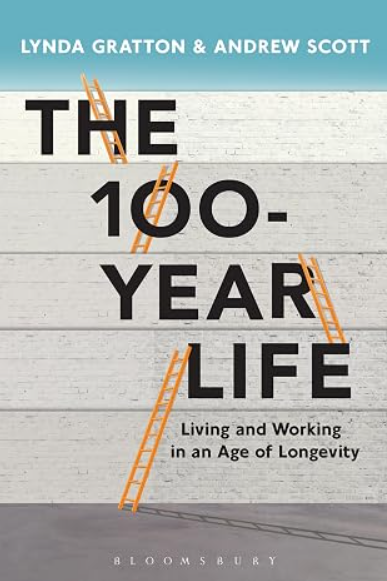
This month’s book recommendation is: The 100-Year Life


I think this is an important book for anyone approaching, or already navigating, midlife.


Why? Because it challenges one of the assumptions that keeps many men stuck: that by 40 or 50, most of life's big decisions have already been made. The 100 Year Life asks us to consider what happens when the old model of life - learn, work, retire - no longer fits the reality of how long many of us will live.


If you're 45 and live into your 90s, you've potentially got another half a lifetime ahead of you. Sit with that for a moment.


Another 40 or 50 years of relationships, work, health, learning, adventure and change.

The 100-Year Life: Living and Working in an Age of Longevity - by Lynda Gratton & Andrew Scott

The authors argue that this will require us to reinvent ourselves multiple times. Careers will change, skills will become obsolete, relationships will evolve, and our definition of success will need updating.


Just as importantly, they encourage us to think about wealth differently; not simply pensions, property and savings, but our health, friendships, knowledge, adaptability and sense of purpose. That's why I think this book matters.


Midlife doesn't have to represent decline or the beginning of a long, slow coast towards retirement. It can be an intermission. A chance to take stock of what you've built, decide what you want to keep and have the courage to change what no longer fits.


Read it slowly and hold its ideas against your own life.


This month’s recommendation is: How to Practice Emotional First Aid


Most men understand maintenance. We service our cars, update our technology, repair things when they break, and hopefully, pay some attention to our physical health. But when it comes to our emotional health, we're often far less proactive.


In this excellent TED Talk, psychologist Guy Winch asks a simple question: why do we take our physical health so much more seriously than our psychological health? He talks about loneliness, failure, rejection, rumination and the damage caused when we continually ignore emotional pain.


What I particularly like is that this isn't a talk about becoming softer or endlessly analysing how you feel. It's about recognising that your mind requires looking after too. That's particularly relevant for men. We can become very good at functioning whilst struggling.


We go to work, provide, perform, solve problems and fulfil our responsibilities, convincing ourselves that because we're still coping, we're okay. But coping isn't always the same as being healthy. Winch's message is refreshingly practical: pay attention to psychological injuries when they occur rather than waiting until they've become something much harder to deal with. For me, that's simply good self-leadership. You don't need to wait until you're struggling before taking yourself seriously.


Watch it, then ask yourself: what am I carrying emotionally that I've become far too accustomed to carrying?


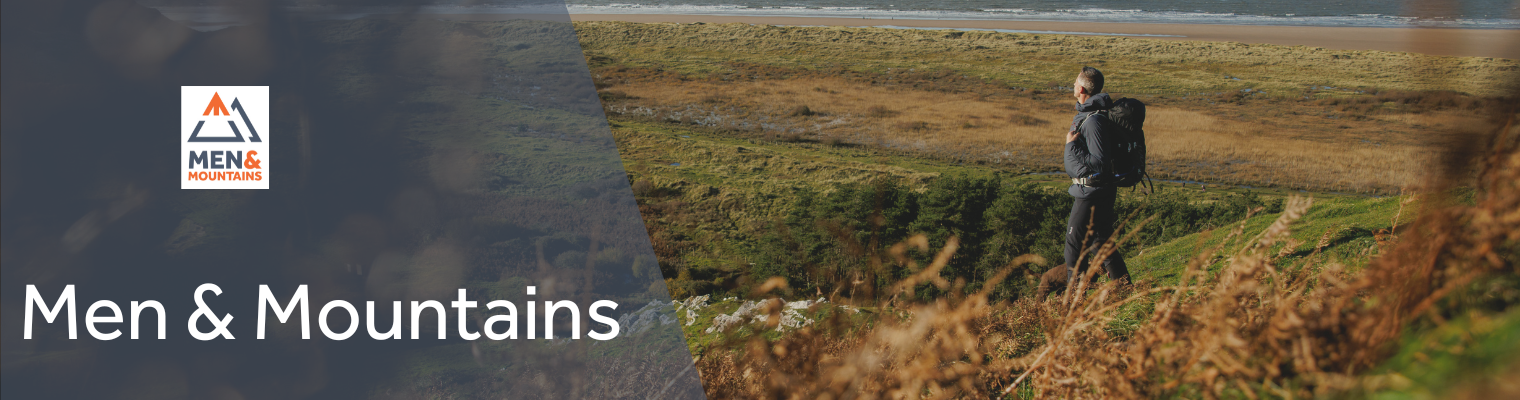
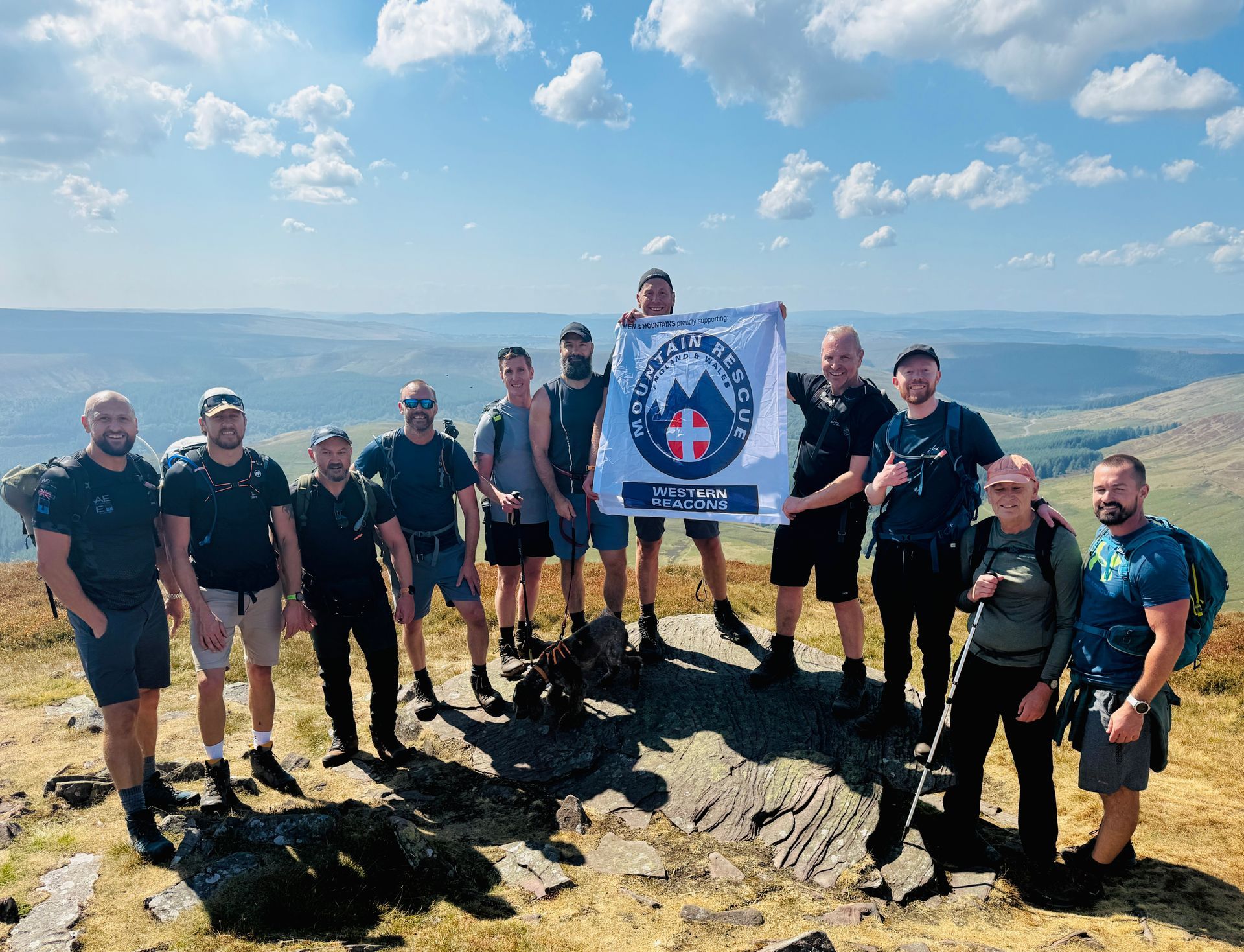
Another thoroughly great hike!  Away from the masses and busier Brecon routes, this month's 8.5-miler gave us everything we could have asked for: near-perfect conditions, stunning views, a decent challenge and, as always, great company. 


Stepping off from Talybont Reservoir, it wasn't long before we were introduced to the Bastard/Super Bastard that is Carn Pica.  A long, challenging climb that certainly got the heart and lungs working, but as is often the case in the mountains, the struggle was worth it. 


Once we'd earned the tops, conditions couldn't have been better.  Sunshine, a light breeze and huge views accompanied us as we traversed the ridgeline, putting some distance between ourselves and everyday life. 


We stopped for lunch with a fantastic view across Brecon and Mid-Wales; an opportunity to rest the legs, share some food, enjoy the conversation and simply appreciate where we were. 


From there, we began the long descent back towards Talybont. The views remained superb and, after several hours in the sunshine, the final stretch through the woodland provided a welcome and cooling change of scenery. 


Good men, shared challenge and honest conversation…  Simple ingredients, but increasingly difficult to find in modern life. 


If you've been following Men & Mountains from a distance and keep thinking about joining us, perhaps it's time to stop thinking about it and instead come and walk with us. 

View Images

If you want to join and be a part of our community, click the button below:

Join Men & Mountains

Every year, Men & Mountains partners with a regional charity. In 2026, our charitable partner is Western Beacons Mountain Rescue. Whilst there’s no cost to join our walks, we actively encourage all attendees to support our charitable initiative; the suggested donation is just £5 per walk.


We love the hills, and we also know how quickly a great day out can turn serious when the weather shifts, someone slips, or a route goes wrong. That's why we’re pleased to be raising money for the volunteers who respond 24/7, 365 days a year. As Martin Thompson (our Charity Secretary) put it, 'Every pound helps keep our mountains, and the people who enjoy them, safer.'


After my broken ankle, and subsequently missing a number of walks this year, we’re behind on our fundraising target. If you’re in a position to support our efforts and Western Beacons Mountain Rescue, here’s the link to our JustGiving page.


Anything is welcome, thank you. 

Support Now
By Dan Stanley August 2, 2026
Welcome to the BetterMen Bulletin.
By Dan Stanley July 3, 2026
Welcome to the BetterMen Bulletin.
Men connecting outdoors in a calm, reflective wellness experience
By Dan Stanley April 23, 2026
Explore the hidden cost of success for men. Reflect on time, purpose, and fulfilment, and learn how to lead a more intentional, meaningful life.
A man reflecting on masculinity, responsibility, energy, and modern life challenges outdoors.
By Dan Stanley March 30, 2026
Explore modern masculinity, mental fatigue, responsibility, and purpose. Practical insights to help men reflect, reset, and show up better in life.
A man sitting alone, writing reflections in a journal about life and purpose
By Dan Stanley February 23, 2026
Why many men feel disconnected at midlife, and how to rebuild purpose, emotional awareness, stronger relationships and lasting fulfilment.
Man journaling his thoughts and reflections.
By Dan Stanley January 26, 2026
Insights, reflections, and tools to handle pressure, midlife challenges, and personal growth for men.
Man reflecting and journaling on presence, strength, and managing festive season stress effectively.
By Dan Stanley December 5, 2025
Supportive insights for men to manage stress, improve presence, and lead themselves well through the festive season with clarity and intention.
A man writing reflective notes about managing stress and leading himself well.
By Dan Stanley November 3, 2025
Supportive insights and tools to help men manage pressure, improve presence, and lead themselves well through the festive season with clarity and intention.
Man writing in a journal, reflecting on life choices and personal growth.
By Dan Stanley October 6, 2025
Explore reflections, quotes, and prompts for men seeking meaning, courage, and a new blueprint for midlife success, purpose, and personal growth.
A man writing in his journal, reflecting on personal growth, purpose, and mindset as part of the Bet
By Dan Stanley September 8, 2025
Discover insights, prompts & resources to help men grow, thrive & live fully—beyond fear, stagnation & the traps of success.