

June 2026
Welcome to the BetterMen Bulletin.
A powerful reflection for men navigating success, time, and what truly matters
For many men, we fall into traps of our own making. We spend years, and in some cases, decades, pursuing the wrong rewards - only to experience the side effects of success: time poverty, loneliness, poor health, midlife crisis and divorce.
My monthly Bulletin is for men asking bigger questions about themselves and their lives. If you’ve arrived at a place, or feeling you’re heading toward it, where the pursuits of your younger years no longer feel meaningful or satisfying, my monthly Bulletin, which includes a range of resources relating to all things men, mindset and success, is for you.

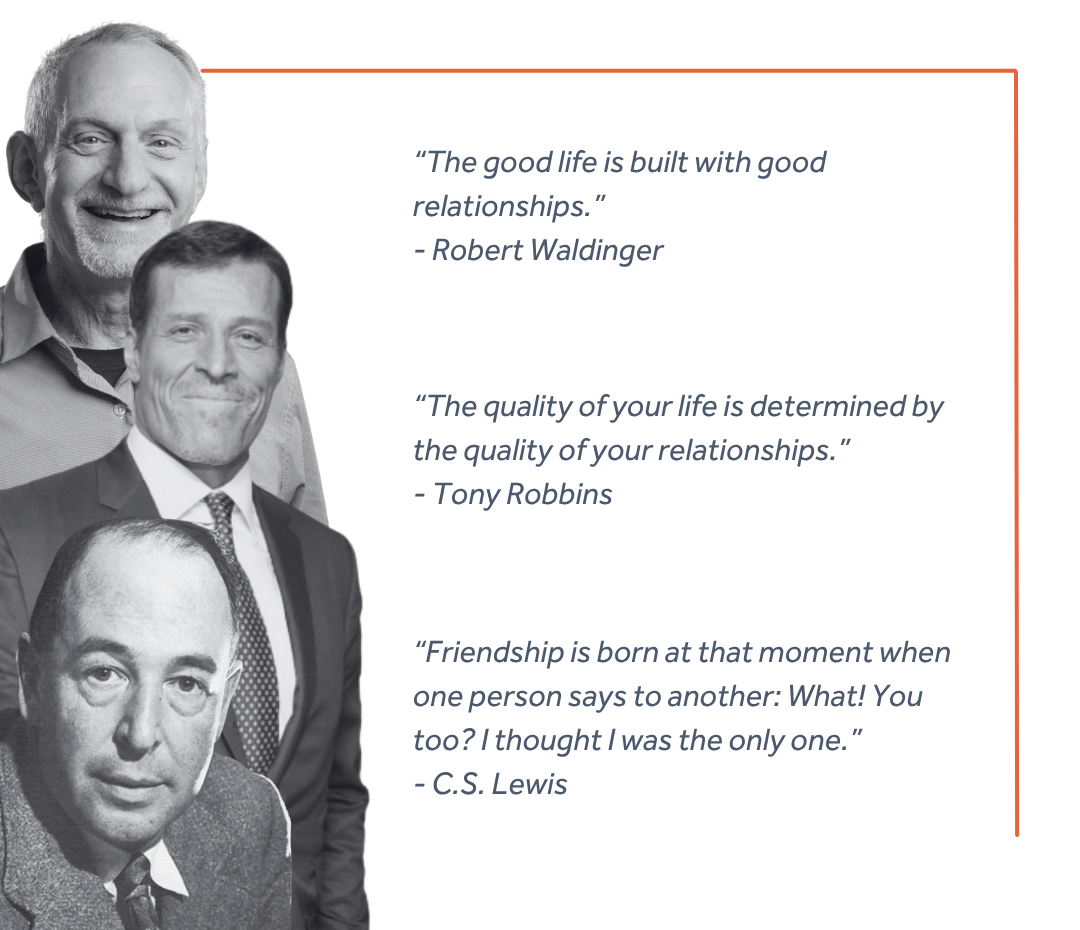
Don’t just read the quotes. Instead, take a moment to consider them and hold them up against your life.
This month’s quote theme is: The Men Who Go Furthest Don’t Go Alone
Most men don't have a connection problem, they have a depth problem.
On paper, they're surrounded by people: a partner, children, work colleagues, school WhatsApp groups, a calendar full of commitments. Yet many still experience a quiet sense of disconnection.
Not because they're isolated, but because their connections are surface deep…
It's become normal, we tell ourselves everyone is busy, we don't want to burden people, equally, we don't want to appear needy, so we keep going, and going, and going.
We provide, perform, solve problems and hold things together.
But connection isn't a luxury, it's a human need. A landmark study from Harvard, spanning more than 80 years, found that the quality of our relationships is one of the strongest predictors of happiness, health and longevity.
Meanwhile, research from the UK suggests that nearly half of men regularly feel lonely, yet many have nobody outside of their immediate family they would discuss a serious personal problem with.
Many men have built successful lives while quietly losing the spaces where they can be fully themselves. Perhaps that's why so many men tell me they feel flat despite having much to be grateful for?
The issue isn't always stress, work, marriage or purpose; sometimes it's simply the absence of meaningful connection. The kind where you don't have to perform, where you can admit you're struggling, where someone knows what's really going on behind the polite answer of, ‘Yeah, I'm good.’
As author and researcher Brené Brown wrote: ‘We are hardwired for connection’, and yet, in an age of digital distraction and time poverty, many men spend years living as though they're not.
Connection won't solve every problem in your life, but it makes every problem easier to carry. So perhaps the question isn't how many people you know, it's this: Who really knows you?
Consider and reflect, using the quotes below, on the quality of connection in your own life and what might need to change.

Sit down and take a minute to read, reflect or journal on the prompts presented below.
This month’s prompt theme is: The Weight You Weren't Meant To Carry Alone
Most men don't talk about stress; they absorb it. Not because they're incapable of expressing themselves, but because from an early age, many learn that strength means handling things alone. We become the provider, protector, problem solver and steady hand; we pride ourselves on being dependable.
Until the weight becomes too much.
Research from the UK consistently shows men are significantly less likely than women to seek support for mental and emotional struggles. Meanwhile, middle-aged men continue to experience some of the highest rates of loneliness, stress-related illness and suicide.
Yet the warning signs rarely look dramatic; more often, it feels like irritability, exhaustion, a shorter fuse, or a sense that life has become repetitive, flat or strangely empty despite having much to be grateful for - this is the experience many men I speak to describe as a midlife (malaise).
It’s not a crisis, rarely a depression, just a lingering sense that something isn't quite right despite the fact you've worked hard, built a career, created a home, supported your family and achieved many of the things you once thought would make you happy.
Yet instead of feeling fulfilled, you find yourself wondering: Is this it?
Psychologist Carl Jung observed that, ‘The afternoon of life must have a significance of its own and cannot merely be a pitiful appendage to life's morning.’ In other words, what got you here won't necessarily take you where you want to go next.
Part of the problem is that many men begin treating life as a task to be completed. One more promotion, one more house move, one more big holiday, one more thing to tick off the list.
The difficulty is that life isn't a problem to solve, it's an experience to have… And when every moment becomes about getting to the next moment, we miss the one we're living.
Author Oliver Burkeman writes, ‘The day will never arrive when you finally have everything under control.’
Perhaps that's the invitation, to stop carrying everything in silence, to stop postponing your life until some future point when things calm down, and to remember that success means very little if you never feel present enough to enjoy it.
Consider and reflect, using the prompts below, on what you're carrying, who you're sharing it with, and whether you've been living your life... or simply managing it:
1. Where in my life am I coping rather than living?
2. Five years from now, what might I regret if I continue living exactly as I am today?
3. Have I become so focused on responsibility that I've forgotten how to experience joy?

This month’s recommendation is:
The Rich Roll Podcast featuring Ed O’Brien of Radiohead
I've listened to a lot of podcasts over the years, but every now and then one lands at exactly the right moment, and this conversation with Ed O'Brien, guitarist with Radiohead, is one of those.
Whilst his story includes music, fame and creativity, it's really a conversation about something far more relatable: what happens when the life you've built no longer feels enough.
The experience of carrying stress quietly, losing connection to yourself, and eventually being forced to confront what's underneath.
What struck me most was Ed's honesty.

There are no grand life hacks or dramatic transformations. Instead, there's a refreshing willingness to talk openly about depression, childhood experiences, identity and the often-uncomfortable process of becoming more fully yourself.
It's thoughtful, grounded and full of reminders that growth isn't always about becoming more. Sometimes it's about removing the masks, expectations and coping strategies that no longer serve you. If you've ever felt disconnected from yourself, trapped in performance mode, or quietly wondered whether there's another way to live, I'd encourage you to give this one a listen.
Top Tip – Definitely fast-forward the adverts, they really disrupt the depth and flow.



This month’s book recommendation is: James Reece series by Jack Carr
If you're looking for a reason to put your phone down, stop scrolling and get lost in a proper story, then I'd highly recommend the James Reece series. Written by a former Navy SEAL, these books move at a relentless pace. They're intense, immersive and unapologetically masculine; full of action, brotherhood, loyalty, sacrifice and the consequences of violence.
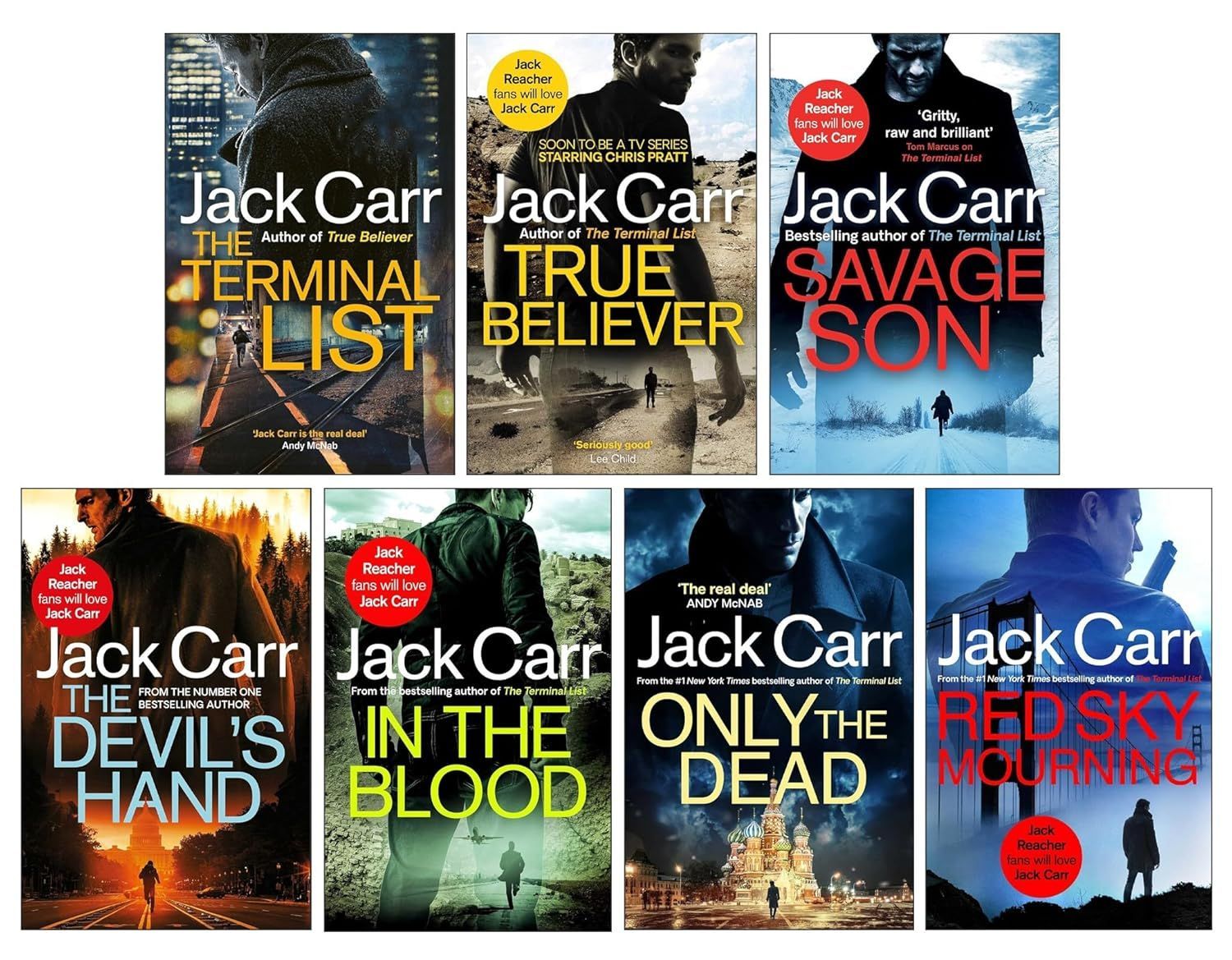
Yet beneath the firefights, covert operations and revenge missions sits something deeper: a man wrestling with purpose, loss and what he's prepared to stand for.
The first book, The Terminal List, was turned into the hugely successful Amazon Prime series starring Chris Pratt. Whilst the adaptation is excellent, the books are better, bigger, richer and far more detailed.
Carr writes from experience, and it shows. The tactics, mindset and environments feel real. There's very little fluff, no wasted pages and no need to skim ahead. Every chapter pulls you forward.
My advice? Buy the whole set. You'll save yourself multiple orders!

This month’s TED Talk isn’t a TED Talk.
This talk was shared with me by a client I supported a number of years ago. Every so often, he messages me to say he's listened to it again because it reminds him of our work together and, more importantly, the philosophy for life he developed as a result of our coaching.
At first glance, This is Water is a university commencement speech; in reality, it's a masterclass in awareness.
David Foster Wallace explores a simple but profound truth: most of our suffering comes not from what happens to us, but from the meaning we automatically attach to it. The traffic jam, the difficult colleague, the frustrating contract. Life becomes harder when we're unconscious of the stories we're constantly telling ourselves.
The message isn't about positive thinking or pretending everything is fine, it's about recognising that we have more choice in how we see the world than we often realise. It reminds us that life isn't happening to us, it's being experienced through us, and the quality of that experience is heavily influenced by where we place our attention and the narratives we choose to believe.
If you've perhaps found yourself frustrated, overwhelmed, disconnected or wondering why life feels harder than it should, give this 20-minute talk your full attention. Like my client, you may never look at your daily life in quite the same way again.

After months of rest and rehab, I’m pleased to report my broken ankle is healed – and just in time for the 2026 Highlander – The Lakes, event.
Before the 16 M&M’s participants sat down to eat on Thursday evening, we shared a simple grace.
We spoke about walking as a band of brothers, embracing both the scenery and the inevitable super bastards in equal measure. We hoped for honest conversations, shared challenges, and the kind of experiences that leave us carrying home more than memories and blisters.
Three days later, I’d say that’s exactly what happened. Despite the tired legs, aching shoulders and a healthy collection of blisters, the Highlander Lake District was a huge success.
Collectively men laughed, cursed, encouraged and took the proverbial out of each other whilst experiencing some of the very best the Lakes has to offer.
Day One saw us leave Grasmere and make our way to Stonethwaite. It was a proper opening day; over 14 miles, taking in High Raise, Angle Tarn and Glaramara before a steep descent into a campsite that was slightly damp and considerably windier than most of us would have preferred.
Day Two began with stiff bodies and slow starts. We skirted Derwent Water via Walla Crag before making a welcome detour to the Heights Hotel for food and a pint. Predictably, in M&M fashion, almost the moment we sat down in the beer garden, the rain arrived!
Day Three was special. (Almost) Everyone had slept well, morale was high, and there was a real sense of anticipation. Ahead of us, via a super bastard, stood Helvellyn, and the unforgettable experience of Swirral and Striding Edge. After a long descent and a well-earned dip in Grisedale Tarn, we arrived back where we started for a celebratory pint, a stretch, and the satisfaction that comes from completing something worthwhile together.
As always, the mountains were only part of the story. The real value was found in the conversations, the laughter, the shared challenge and the reminder that life is better when experienced alongside good men!
Thank you to every man who joined us. Our next Men & Mountains walk in Wales, the first in several months following my ankle injury, is on Sunday 12th July; I hope many of you can make it.
And finally, if you’ve ever considered one of the Highlander events, I can’t recommend them highly enough. The planning, support and overall experience are genuinely second to none. I’m already keeping an eye on next year’s adventures, particularly the Croatia/Slovenia events.
Until then, here’s a short video montage of our Highlander experience:
If you want to join and be a part of our community, click the button below:
In less than two minutes, get an accurate temperature check of the state of your life.
My carefully crafted diagnostic tools, at the link below, will enable you to successfully identify the areas of your life that are helping or hindering you. Upon completion, you’ll receive a personalised report containing recommendations designed to enable you to live better and achieve more.
Act now, assess your Work-life balance, whether you need a coach, or if you're heading toward a midlife crisis.